The Perfect Gift For Newborns

Written by Lara on September 3, 2006

Newborn Baby

What better reason to celebrate than the birth of a new baby? Of course, along with the celebration comes the gift-giving. Whether you opt for one of the classics — baby clothes, bedding, or a silver keepsake (rattle, spoon, frame, etc.) — or something a little more creative, the new arrival is sure to appreciate it, even if he may not be able to send you a thank-you note just yet. Here are some great gift ideas:

1. A personality write-up based on his zodiac sign or birth date will be a one-of-a-kind keepsake for his baby book

2. A kit filled with all the necessities. Just bundle a car seat with a sun shade, car toys, and a pair of baby-sized sunglasses, and she’ll be ready to go.

3. Create your own gift kit with a comforting nightlight, an entertaining mobile, and some soothing music made just for babies .

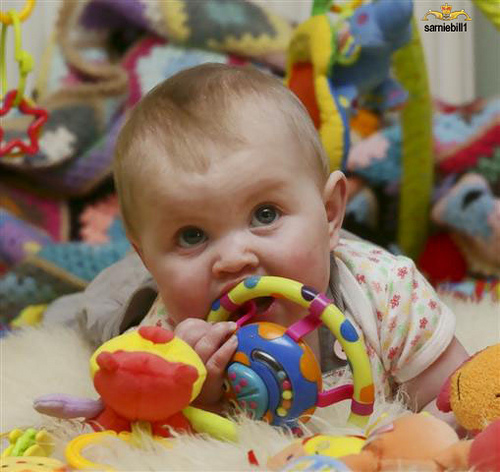
4. A good supply of soft, resilient chewable toys will let her explore safely with her mouth.

5. Baby-friendly board books in with the traditional hardcover variety — that way she can truly appreciate the sound of your gift and the taste as well!

Categories: Babies, Tips

Mama’s Boy

Written by Lara on September 1, 2006

ss

My 18-month-old son is the most beautiful boy in the world. He clings to me like glue, looks soulfully into my eyes and is never happier then when we are snuggled together reading “Goodnight Moon”, his tiny hand in mine. He then chants ‘mama…mama” sweetly as I read, and I just melt with love (like Elvis and doting Mama Gladys in pic).

Unlike my 4-year old girl who was Miss Independence since day 1 (dont get me wrong, we have a special bond too, but its just different), he just seems more vulnerable and more needy of Mom than my girl ever was. These days she’s more into her football or friends at kindergarten, but I can’t ever remember her being like my son. It just got me thinking. Is my son doomed to be a Mama’s Boy? Was it like this with all mothers and sons?

Take my Grandmother for instance. When my aunts come for lunch at her apartment, they’ll have to make do with whatever is on the table (or cook themselves more likely). But when my Uncle (only son, mind you) comes for his weekly visit….the best steak is laid out and all his other favourite dishes! And when the aunts complain, Grandma just shrugs and says “well, he’s my son!”.

When I asked girlfriends and aunts who had sons about this strange mother-son phenomena, they all heartily agreed that indeed, things were always different with their sons - there was definitely some kind of love affair going. And that to understand it with our daughters, you had to realize that the same thing was going on with their Daddies.

Comments Off

One Last Word

Written by Lara on August 23, 2006

dd

Nat now seems to be recovering, and the phlegmy cough is at least far less scary that the high fever she had yesterday.

While doing research though I stumbled upon an article which may be interesting for any Moms out there experiencing the same thing (new moms - dont worry you will!). I’ve condensed it.

Fever in Children by Len Leshin, MD, FAAP.

Fever is the body’s reaction to infection. Through mechanisms that aren’t known well, some aspect of infection and/or inflammation causes the brain to reset its “thermostat.” There are many theories for why this happens, including the idea that most germs can’t replicate well at higher body temperatures and that some parts of the immune system works better at higher temperatures. When the body has reset its thermostat, any temperature below that is considered by the body to be cold; so if the thermostat has been reset to 104 F, a temperature of 102 F will actually seem cold, and the body starts shivering to increase body heat: that’s why we get “chills.”

While fever is considered a rise in body temperature, not everyone’s body temperature is the same. The common average cited is 98.6 F (37.0 C), but your actual “normal” temperature may vary. Regardless, in infants and small children, fever is regarded as anything 100 F (37.8 C) or higher; in school-aged children and above, 99.3 F (37.4 C) or higher.

Here’s the important point: Fever is NOT dangerous! The amount of temperature required to hurt the human brain is over 107.6 F (42 C). Fever due to infection very rarely goes over 106.2 (41.3 C), and while scary to parents, is not harmful. (Temperatures over 107.6 F are usually due to heatstroke, head trauma, toxic ingestions or anesthesia side effects.) Seizures due to fever can occur in the age range of 4 months to 6 years, but is most often associated with an abrupt rise in temperature, rather than an extremely high fever. And while seizures due to fever are frightening, they are short (less than 5 minutes) and are very rarely harmful to the child’s brain.

Important note: while fever is not dangerous, it is a sign of infection, and there are some infections that are dangerous to children. How high the fever gets may not tell you how dangerous the infection may be. Infants 3 months of age and younger may not show serious signs of infection until it is too late, so these infants should always be seen by a doctor when febrile. For older infants and children, they should be seen by a doctor or other health care provider if you feel the symptoms may indicate that your child may have a serious infection, or if you are unsure if your child’s symptoms are serious or not.

Comments Off

Why Won’t My Baby Sleep?

Written by Lara on July 27, 2006

sleep-whatcanudo_100.jpgThe phrase sleeping like a baby is one we’ve grown up hearing. Then you become a parent and you realize sometimes your baby won’t sleep at all! You’ve barely put her to bed and she’s crying again. You’ve fed, burped and changed your baby’s diaper. You checked if he’s running a fever, checked for any possible causes of discomfort yet your baby keeps crying and you are now frazzled and worried.

Naturally, being loving parents, the first thing we rule out is illness. Better to be overprotective than too late, right? Thank goodness for pediatricians who truly understand that we want our children to be well and don’t mind being bothered at odd hours when we truly are at a loss.

Now that you’re sure that you baby’s health is fine, it is time to check your little ones sleeping habits. You may need to make some adjustments if your child has developed some habits that contribute to the restless nights. Hopefully these tips will help you get your kid to sleep through the night.

  • Napping is normal for babies but try not to let them nap more than 3 hours during the day.
  • When bedtime comes around, as your baby gets sleepy put him in his crib. Get him used to associating his crib as time to sleep.
  • Avoid rocking your baby to sleep. Though we all love cuddling our kids, doing this develops a pattern where they need you to actually rock them to bed everynight. Get them used to quieting down in their crib instead, without the motion.
  • A lullaby is a favorite method to soothe your child to sleep. Put on some soft music for your baby. There is a vast collection available intended just for babies.
  • If your baby does wake up in the middle of the night avoid picking him up or playing with him. Keep your midnight visits short and soothing and encourage your baby to go back to sleep. It may be as simple as your child needs a diaper change which you can do quickly, quietly and get him settled in again.
  • Avoid giving your child a pacifier before sleeping. Babies used to this usually cry if it falls out of their mouth and you spend your night plugging it in. As we all know, none of us sleep with a pacifier so your child can do without it.

[tags]parenting,babies,sleep,tips[/tags]

Comments Off
Categories: Babies, Dads, Moms, Tips

Sibling Rivalry

Written by Lara on July 19, 2006

sibling rivalry.jpgThey yell at each other, nag each other, bicker, scream, bully each other and basically go, “Mom, look at what he or she is doing”. It gives you a headache just listening to them. The never ending raised voices between your kids grates on your nerves.

Why do kids fight?

For one, they are competing for what they see as a limited resource: your time, attention and love. As each new child is added to your family, that is yet another person to take your attention away from them. As we all know, there is nothing like knowing our parents actively love us and having 20 minutes of your time if your time if you only have an hour to spend with the family just isn’t enough. This is especially true if there is a new baby in the house. They know that babies need more attention, but they need you too.

Another reason may be that they are trying to establish their own identity. Siblings too close in age tend to have to share too many things, from clothes to friends. It can be both an advantage and a disadvantage. It is very difficult to be an individual when you practically have no personal space.

So, what can be done?

Try not to play favorites and give everyone equal time. Don’t give just one kid a special treat. Make everything a family thing as much as possible.

Recognize their individuality. Praise each for the unique things that they are good at. Be aware of their individual strengths and emphasize the blessing that that uniqueness brings your family.

If possible, find a way so that each child has the necessary space and privacy. Everyone needs that, adult or child. We all need times of peace and quiet and time filled with our brand of noise…erm…music.

[tags]parenting,relationships,sibling rivalry,fighting,personal space,individuality,brothers,sisters[/tags]

Comments Off

Toys for Babies

Written by Lara on July 5, 2006

parenting.gifBabies are very curious. They love to explore and look around. Everything is new to them and they are excited to learn. It is always a great idea to stimulate your babies love of learning.

Toys do not have to be expensive for them to be enjoyed by your baby. In fact, you’ll be surprised that they prefer plain, simple things to gadgets and gizmos at the start. You can save the expensive toys for when he or she already knows how to care for them as well as play with them.

It’s a great idea to get them a bunch of plastic balls of varying colors. They can have fun swimming among the balls and getting a handle of its shape. It familiarizes him with the round shape while you teach him the various colors. Even your older kids will want to jump in among the balls.

Blocks are always a big hit. Letter, numbers or pictures on the sides can be used to help teach your baby. Since we all know that babies go through the stage where they love to throw, get soft blocks instead. They are long lasting and washable and more safe than wooden ones.

As they become more mobile, they begin to enjoy toys that they can move around as well. Notice how even if your child can’t talk yet, he can already mimic the sound of the car? Stimulate his imagination and get him moving around with vehicles that he can push or pull along. In fact, there are even cars that they can ride and you can push around. They love those and you’ll enjoy playing with him!

Comments Off
Categories: Babies, Tips

How To Introduce Your Pet To Your New Baby. Part 2

Written by Lara on May 27, 2006

dog

3. Animals, like humans, find comfort in routine. An established pattern on which to fall back on will help combat the insecurity your pet will naturally feel during the first few weeks after baby’s arrival. Along the same lines, allow your pet to get used to some of the new baby smells before you bring your infant home. Apply baby lotion or powder to your hands, for example, and allow your pet to sniff baby’s clothes and blankets. If possible, allow him to investigate an article of clothing or blanket worn by the new baby prior to the infant’s arrival from the hospital. Animals rely heavily on their sense of smell, so familiarity with the baby’s smell will help your pet recognise him as part of the family when he comes home.

4. When you finally arrive home with your new baby, greet your pet happily and tell him how much you missed him. Gently introduce him to the baby so he can get a good look at the new family member. From that point forward, include him in as many baby activities as possible. Even saying his name while you’re changing nappies or feeding your infant will make your pet feel like an important part of this new life. Most behaviour problems pets exhibited after a new baby’s arrival stem from jealousy and neglect.

By paying special attention to your pet, preparing him in advance and including him as much as possible after baby comes home, you can avoid such problems and ensure a harmonious household.

Categories: Babies, Health, Tips

How To Introduce Your Pet To Your New Baby. Part 1

Written by Lara on May 26, 2006

dog

Having a baby may not mean saying goodbye to your beloved pooch. Find out how to help your two ‘babies’ become best of friends.Shelter workers report that many people who surrender their pets to animal shelters cite a new baby as the reason why they give up their pet. Yet many other families have successfully brought a new baby into their home and still been able to keep and enjoy their animal friends. What is the secret of their success? Experts suggest that preparing for the baby’s arrival well in advance and taking a few simple precautions can avoid friction and jealousy between your human baby and your furry one. Remember, your four-footed children are accustomed to your undivided attention and pampering.

1. Some jealousy will naturally surface when your new infant suddenly consumes all of your time. Plan to set aside a few minutes each day for quality time with your pet. Some extra attention and a few treats can go a long way toward avoiding behavioural problems and jealousy.

2. Dogs and cats are largely creatures of habit. Though your own routine will be completely disrupted by the new baby, try to keep your pet’s routine as normal as possible. If you anticipate changes in that routine, such as restricting their access to the baby’s room or feeding in a new location, begin implementing the changes as soon as possible before the infant comes home.

Categories: Babies, Health, Tips

Listing The Do’s and Do not’s of Childhood

Written by Lara on May 24, 2006

bb

Some times our kid’s need a little helping hand in remembering what we ask them to do. If you are a parent of a child who is old enough to start helping out around the house…You will know what I mean.

Some children just do not comprehend and know how to complete tasks from start to finish. So they ask mom or dad over and over how to do whatever it is they are attempting to do.

I thought I would take a moment and list a few things that might be great to put on a child’s list of To Do’s and To Not Do’s. Making a list and posting it in words your child can read will not only help you save all the questions. It will also help you to encourage your child to read.

Toddlers Ages 3 to 5

1. Pick up your toys.
2. Put your toys where they belong.
3. Put your dirty clothes in the hamper.
4. When you are done playing put your things
away.

Kindergartners Ages 5 to 6

1. Pick up your things in your room.
2. Put everything where it should go.
3. Put your dirty clothes in the hamper.
4. Set out your clothes for the next morning.
5. Try and make your bed.
6. Help set the table.

Children Ages 6 to 10

1. Clean your room.
2. Make your bed.
3. Put toys away and other play items.
4. Put dirty clothes in the hamper
5. Help fold and put clean clothes away.
6. Help set the table.
7. Learn to pick up around the front room.
8. Learn to vacuum.
9. Learn to dust and clean surfaces in bathroom.

Children Ages 10 to 12

1. Clean your room.
2. Make your bed.
3. Put belongings away after play or use.
4. Put dirty clothes in hamper.
5. Help fold and put clean clothes away.
6. Set the table and wash dishes.
7. Learn to clean and vacuum front room.
8. Clean the bathroom.
9. Take care of personal belongings.
10. Put your bike away or any outside items.
11. Feed and take care of a pet.
12. Take out the trash.
13. Help around the house.
14. Be willing to learn new things.

Teenagers 13 and up

1. Do all of the above listed things.
2. Help mow the lawn and pick up around the yard.
3. Do extra chores for added allowances.
4. Baby sit as you grow more responsible.
5. Clean the house.
6. Learn to cook a little.
7. Learn to do laundry.
8. Learn the value of money.
9. Do some volunteer work.

Now Don’ts For All Ages.

1. Do not break house rules.
2. Do not talk to strangers.
3. Do not go any place alone or without
your parents permission.
4. Do not disrespect other people.
5. Do not talk back to teachers, parents or
people with authority.
6. Do not leave your bike or belongings in
places they do not belong.
7. Do not go places by your self.
8. Do not leave your mess for others to clean up.
9. Do not hit, kick or bite.
10. Follow all of your parents DO NOT Rules.

I am sure you get the basic idea of what you want your child to do and to not do. Just make up a list and post it on the door. You may want to add a how to clean your room list. It is always helpful to use simple words that the kids understand and can relate too. You may want to show them where the dirty clothes go.

Just a few ideas to help make life a little easier and more pleasant on the home front.

Categories: Babies, Dads, Moms, Teens, Tips, Toddlers

A Brilliant Potty Training Tip: M & Ms!!

Written by Lara on May 23, 2006

mm

When I was five or six years old, my best friend Jenna’s little sister was being potty trained. In their upstairs bathroom they kept a small bowl full of M&Ms so that when Betsy used the potty she would be rewarded with one. I remember one day I couldn’t resist the M&Ms anymore. While in the bathroom under the guise of actually needing to use the facilities, I ate all but maybe three of the M&Ms in that bowl. I felt guilty, but man, they tasted so good. I was only a little kid, but I never forgot how enticing those M&Ms looked perched on the sink cabinet. So, 25 or so years later as I’m trying to interest my own daughter in potty training again, I thought of those M&Ms.

Caught stalled in the zone of potty training, I needed a brilliant new plan to ignite interest in my two-and-a-half-year old, Molly. Let me tell you, I thought of one! I believe it’s the perfect, no-fail, two-part, potty-training plan.

So, we headed to the store and bought the two major components in the plan: M&Ms and a package of princess pull-ups.

The ingredients to this potent mixture of potty training mania are perfect for Molly. She knows what the wonderful little M&M candies taste like from her infrequent opportunities to have them (mostly around holidays or birthday parties) and LOVES them. She is even more excited about the prospect of eating them possibly several times a day! Then there’s the Princess Pull-Ups. That’s right, on the market they have pull-up diapers (meant to be more like training pants than actual diapers) that have princesses and hearts and flowers all over them. They are beautiful. In essence, they are a little girl’s dream of what the best underpants in the world should look like.

Like I said, this is a brilliant potty training plan.

We’ve set up “the plan” as follows: We keep a little baggie of M&Ms in the bathroom and Molly gets to eat one (her choice of color, of course) every time she uses the bathroom. If she is able to go No. 2 in her potty seat, she gets two, that’s right, two M&Ms. In addition, she gets to wear her beautiful princess pull-ups, or as we call them her “big-girl-princess-pants” all day long. What a great deal!

So, we’ve got the potty seat, the books, the extra princess pull-ups and the M&Ms all set up in the bathroom. We’ve hatched our plan to Molly who is excited and eager. All is well. I know we are in the very early stages, but I’m pretty confident that this is going to be a brilliant, no-fail potty training technique. We’ve tailored the incentives to Molly and think that they will work. Of course princess pull-ups and candy wouldn’t work for every child, but I think we’ve got a good shot. We’ll see.

I must admit, sometimes when I’m in the bathroom I steal a couple M&Ms for myself. I can’t help it. They just look so good sitting there, but really, isn’t that the point?

Categories: Babies, Dads, Moms, Tips, Toddlers